
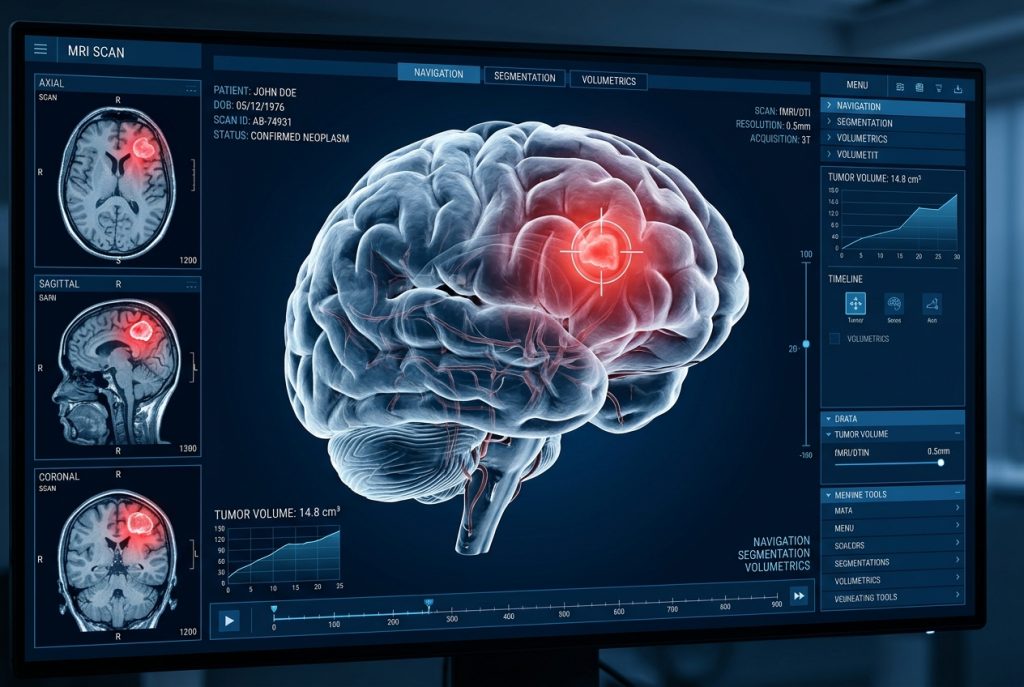
A brain tumor is an abnormal growth of cells inside or around the brain. Because the brain controls almost every function of the body, tumors can cause a wide variety of symptoms depending on their size and location. Recognizing these early is the first step toward effective treatment.
Common Symptoms of Brain Tumors
- Persistent or worsening headaches — particularly those that are worse in the morning or when lying down.
- New-onset seizures — any seizure in an adult without a known cause warrants a brain scan.
- Nausea and vomiting — especially when not related to a stomach illness.
- Memory loss or personality changes — sudden confusion, mood swings, or difficulty concentrating.
- Speech or language problems — difficulty finding words, slurred speech, or trouble understanding.
- Vision disturbances — blurred or double vision, loss of peripheral vision.
- Weakness or numbness in the face, arm, or leg — typically on one side of the body.
Types of Brain Tumors
Brain tumors can be primary (originating in the brain) or secondary (spread from other organs). Common types include gliomas, meningiomas, pituitary adenomas, and acoustic neuromas. Not all are malignant — many are benign but still require treatment if they press on brain structures.
A headache alone does not mean you have a brain tumor. However, new, progressive, or unusually severe headaches should always be evaluated by a specialist.
Diagnosis and Imaging
At BNC, diagnosis typically begins with an MRI of the brain with contrast, which provides clear images of the tumor size, location, and characteristics. A CT scan may also be used in emergency settings.
Why Early Detection Matters
Early diagnosis can help doctors understand the tumor’s type, size and location and plan the most appropriate treatment. Depending on these factors, treatment may include surgery, radiation therapy, medication or other approaches.




Leave a Reply